
Black Cardamom (Kali Elaichi) 100g – Bold, Smoky & Aromatic Whole Spice




From the same category


Black Cardamom (Kali Elaichi) 100g – Bold, Smoky & Aromatic Whole Spice
Black Cardamom (Kali Elaichi) 100g — Bold, Smoky & Aromatic Whole Spice
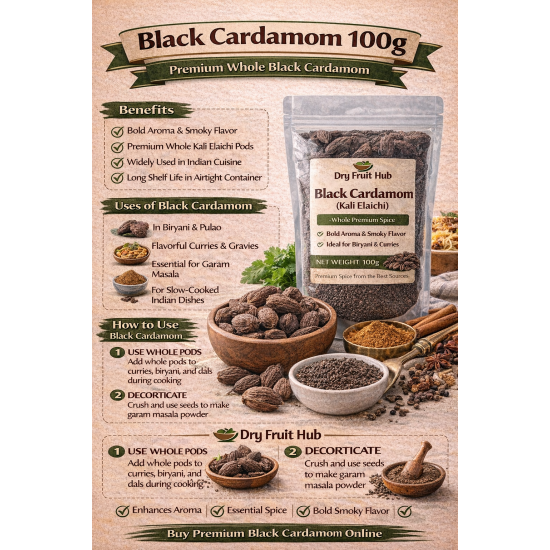
Our Black Cardamom, also known as Kali Elaichi or Badi Elaichi, is a premium-quality whole spice prized for its deep, smoky aroma and earthy flavour. Carefully sourced and hygienically packed, these whole pods are an essential ingredient in biryani, garam masala, and rich, slow-cooked Indian dishes — bringing authentic depth to your cooking that no substitute can match.
Why Choose Dry Fruit Hub Black Cardamom?
| ✅ ISO 22000:2018 Certified | International Food Safety Management Standard — our sourcing and packing process is certified and regularly audited. |
| ✅ ISO 9001:2015 Certified | Quality Management System certification — consistent size, aroma, and quality across every batch. |
| ✅ 20+ Years of Trade Expertise | Based in Begum Bazar, Hyderabad — sourcing premium whole spices for decades. |
| ✅ Whole, Unbroken Pods | Selected whole pods retain their essential oils and aroma far longer than broken or powdered cardamom. |
| ✅ No Additives, Naturally Dried | 100% pure black cardamom pods — nothing added, no artificial treatment. |
| ✅ Hygienically Packed — 100g | Packed in food-grade, moisture-proof packaging to preserve aroma and freshness. |
Black Cardamom vs Green Cardamom — What's the Difference?
These are two completely different spices, often confused by first-time buyers. Here's a quick comparison:
| Aspect | Black Cardamom (Kali/Badi Elaichi) | Green Cardamom (Choti Elaichi) |
|---|---|---|
| Botanical Name | Amomum subulatum | Elettaria cardamomum |
| Size & Appearance | Larger, dark brown/black, wrinkled exterior | Smaller, pale green, smooth exterior |
| Flavour Profile | Smoky, earthy, with a hint of camphor | Sweet, floral, with citrus notes |
| Best Used In | Biryani, pulao, curries, garam masala, savoury gravies | Desserts, kheer, chai, kulfi, sweet dishes |
| Other Names | Badi Elaichi, Moti Elaichi, Bharat Ela | Choti Elaichi, Sukshma Ela |
Health Benefits of Black Cardamom (Kali Elaichi)
Black cardamom isn't just a flavour powerhouse — it has a long history of traditional and Ayurvedic use for wellness. Here's what makes it worth keeping in your kitchen:
- Supports Respiratory Health: Traditionally used to ease cough, bronchitis, and mild respiratory discomfort. A common Ayurvedic home remedy involves black cardamom mixed with honey to soothe coughs.
- Antibacterial & Antiseptic Properties: The essential oils in black cardamom seeds have shown antibacterial and antifungal properties in studies, supporting the body's natural defences against infections.
- Aids Digestion: Stimulates the secretion of digestive enzymes, helping relieve indigestion, bloating, gas, and even occasional constipation. Its antispasmodic properties help soothe stomach cramps.
- Boosts Immunity: The antimicrobial compounds in black cardamom may help support overall immune function, offering some protection against common bacterial and viral infections.
- Liver Support: Some studies suggest black cardamom may have a positive effect on liver health, supporting the body's natural detoxification process.
- Natural Mouth Freshener: Chewing on a small piece of black cardamom is a traditional way to freshen breath and support oral hygiene, thanks to its antibacterial properties.
- Ayurvedic Significance: Known as Bharat Ela in classical Ayurvedic texts, black cardamom is described as having properties distinct from green cardamom, used independently in traditional formulations.
⚠️ Health Note: Cardamom in large doses may affect the menstrual cycle in some women, and may interact with blood pressure or blood-thinning medications. Stick to normal culinary quantities, and consult your doctor if you're pregnant, on medication, or planning to consume cardamom water/extracts regularly for medicinal purposes.
How to Use Black Cardamom — Tips & Recipes
| Use | How to Use |
|---|---|
| Biryani & Pulao | Add 2-3 whole pods (lightly crushed) while sautéing onions in oil/ghee at the start of cooking to release maximum aroma. |
| Garam Masala | A core ingredient in homemade garam masala blends — dry roast with other whole spices before grinding. |
| Curries & Gravies | Add whole to slow-cooked curries, dal, and gravies — remove before serving, or leave for guests to set aside. |
| Cardamom Tea/Water | Crush 1 pod and boil in water for 5-7 minutes for a warming, digestive tea — especially soothing after heavy meals. |
| Meat & Stock Preparations | Used widely in meat marinades and stock preparations for its deep, smoky undertone. |
Nutritional Information (Approximate, per 100g)
| Nutrient | Per 100g |
|---|---|
| Energy | 311 kcal |
| Carbohydrates | 68 g |
| Dietary Fibre | 28 g |
| Protein | 11 g |
| Fat | 6.7 g |
| Calcium | 383 mg |
| Iron | 13 mg |
* Since cardamom is used in small quantities per serving, actual nutrient intake per use is minimal. Values are approximate. Not intended as medical advice.
Product Details
| Product Name | Black Cardamom (Kali Elaichi / Badi Elaichi) |
| Net Weight | 100g |
| Brand | Dry Fruit Hub |
| Botanical Name | Amomum subulatum |
| Form | Whole, unbroken pods |
| Flavour | Smoky, earthy, with a hint of camphor |
| Shelf Life | 18-24 months from date of packing |
| Storage | Store in a cool, dry place in an airtight container, away from moisture and direct sunlight. |
| Certifications | ISO 22000:2018 | ISO 9001:2015 | FSSAI Licensed |
| Additives / Preservatives | None — 100% Natural |
Frequently Asked Questions (FAQs)
Q: What is the difference between black cardamom and green cardamom?
Black cardamom (Amomum subulatum) and green cardamom (Elettaria cardamomum) are different plants with different flavours. Black cardamom is larger, with a smoky, earthy taste used mainly in savoury dishes like biryani and curries. Green cardamom is smaller, with a sweet, floral flavour, typically used in desserts, chai, and sweet dishes.
Q: Can I use black cardamom instead of green cardamom in a recipe?
It's not recommended to substitute one for the other, as they have very different flavour profiles. Black cardamom's smoky, savoury character will clash in sweet dishes that call for green cardamom's delicate floral notes, and vice versa for savoury dishes designed around black cardamom's depth.
Q: How many black cardamom pods should I use in cooking?
For a typical biryani or curry serving 4-6 people, 2-3 whole pods are usually sufficient. Black cardamom has a strong, dominant flavour, so it's best to start with fewer pods and adjust to taste, since overuse can make the dish taste overly smoky or bitter.
Q: Should I remove black cardamom pods before serving a dish?
It's a personal preference. Many cooks remove the whole pods before serving since they aren't meant to be eaten directly and can have an overpowering taste if bitten into. Others leave them in for guests to set aside themselves — either way is acceptable.
Q: Can I eat black cardamom seeds directly?
While not toxic, eating black cardamom pods or seeds directly is uncommon due to their intense, bitter, smoky flavour and tough fibrous texture. Traditionally, a small piece is sometimes chewed as a mouth freshener or digestive aid, but it's primarily used as a cooking spice rather than eaten as a standalone food.
Q: Does black cardamom really help with respiratory issues like cough?
Black cardamom is traditionally used in Ayurveda as a remedy for cough, bronchitis, and mild respiratory discomfort, often mixed with honey. While traditional use is well-documented, it should complement — not replace — appropriate medical treatment for persistent or serious respiratory conditions.
Q: Is black cardamom safe for pregnant women?
In normal culinary quantities used in cooking, black cardamom is generally considered safe during pregnancy. However, concentrated extracts or large medicinal doses should be avoided without medical guidance. As always, consult your doctor regarding dietary changes during pregnancy.
Q: Can excessive cardamom consumption affect women's health?
Some sources note that consuming cardamom in very large doses may affect the menstrual cycle in some women. This is generally only a concern with excessive, concentrated intake — normal culinary use in cooking is considered safe for most people. If you have menstrual health concerns, consult your doctor before using cardamom medicinally.
Q: What is the shelf life of black cardamom, and how should I store it?
Whole black cardamom pods have a long shelf life of 18-24 months when stored correctly — in a cool, dry, airtight container away from moisture and direct sunlight. Whole pods retain their aroma and potency far longer than ground/powdered cardamom.
Q: Why does my black cardamom have a wrinkled, rough exterior?
This is completely normal and expected. Black cardamom pods are naturally thick, dried, and wrinkled in appearance — this is part of their natural drying process and is not a sign of poor quality or spoilage.
Q: Is black cardamom the same as cinnamon or cloves?
No, black cardamom is a completely different spice from both cinnamon and cloves, though all three are commonly used together in garam masala. Black cardamom has a smoky, earthy flavour, cinnamon is warm and sweet, and cloves are pungent and slightly bitter — each contributes a distinct layer to spice blends.
Q: What is black cardamom called in different Indian languages?
Black cardamom is known as Kali Elaichi, Badi Elaichi, or Moti Elaichi in Hindi. In classical Ayurvedic texts, it's referred to as Bharat Ela. Regional sub-varieties also exist, such as Morang Ilaichi (Bengal cardamom), grown mostly in West Bengal and Assam.
Q: Can black cardamom be used in tea?
Yes, though it's used less commonly than green cardamom for tea due to its strong, smoky flavour. A crushed pod boiled briefly in water makes a warming, digestive tea. For regular chai, green cardamom is the more popular and traditional choice due to its sweeter, milder flavour.
Q: Does black cardamom help with bad breath?
Yes, traditionally, chewing a small piece of black cardamom is used as a natural mouth freshener and breath aid, thanks to its antibacterial properties that help reduce odour-causing bacteria in the mouth.
Q: Where is black cardamom grown?
Black cardamom is primarily grown in the eastern Himalayan regions, including parts of Nepal, Bhutan, and northeastern India (particularly Sikkim, West Bengal, and Assam). India produces a significant share of the world's black cardamom harvest.
Q: How can I tell if black cardamom has lost its freshness?
Fresh black cardamom pods should have a strong, smoky aroma when lightly crushed. If the pods feel unusually light, brittle, or have very little aroma when broken open, they may have lost potency due to age or improper storage. Always store in an airtight container to preserve freshness for as long as possible.
Q: Is black cardamom good for liver health?
Some preliminary studies suggest black cardamom may have a positive effect on liver function, supporting the body's natural detoxification processes. However, this should not be relied upon as a treatment for any diagnosed liver condition — please consult your doctor for medical liver concerns.
Q: Are there any side effects of consuming too much black cardamom?
In normal culinary quantities, black cardamom is safe for most people. Excessive consumption may cause digestive discomfort, acid reflux in sensitive individuals, or interact with blood pressure and blood-thinning medications. As with any spice, moderation is key — there's no need to consume large amounts to get its flavour or traditional benefits.
Q: Do you offer bulk / wholesale orders for Black Cardamom?
Yes. With over 20 years of wholesale trade experience from Begum Bazar, Hyderabad, we supply Black Cardamom (Kali Elaichi) in bulk to retailers, restaurants, and distributors across India. Please contact us through the Contact Us page for bulk pricing.
Dry Fruit Hub — Trusted Since 20+ Years
ISO 22000:2018 & ISO 9001:2015 Certified | Begum Bazar, Hyderabad | 100% Natural Products | FSSAI Licensed