
Rock Sugar (Dala Misri) 800g – Natural Crystal Sugar for Daily Use


From the same category


Rock Sugar (Dala Misri) 800g – Natural Crystal Sugar for Daily Use
Dala Misri 800g | Rock Sugar | Natural Crystal Sugar for Tea, Milk & Sweets
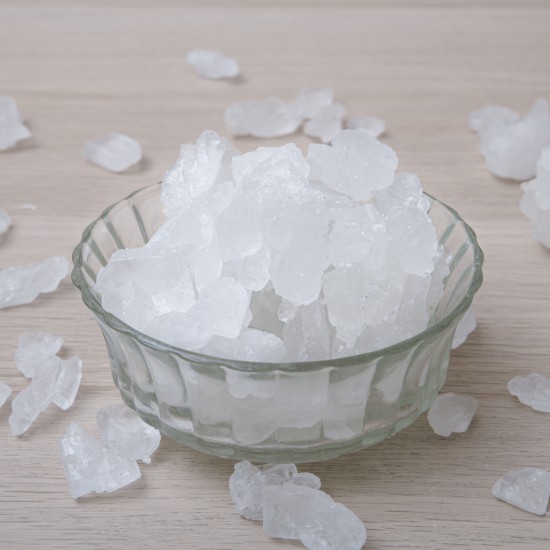
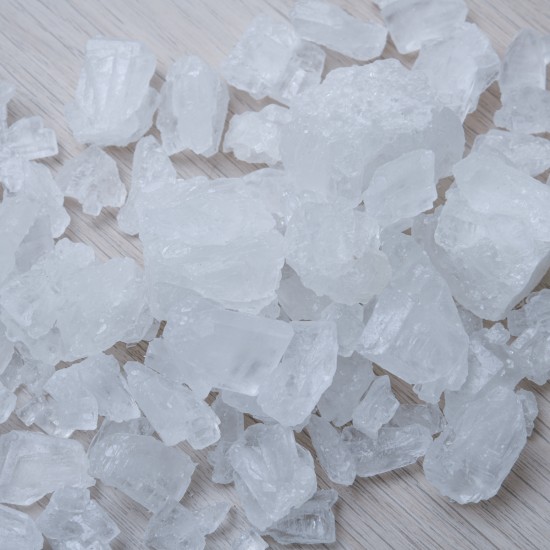
Most sweeteners in Indian kitchens are either heavily refined or have a strong flavour that dominates everything else. Dry Fruit Hub Dala Misri 800g is different — large, transparent rock sugar crystals with a mild, clean sweetness that dissolves slowly and evenly without overpowering the natural flavour of tea, milk, or desserts. Also known as Misri, Mishri, or Crystal Sugar, this naturally crystallised form of sugar has been used in Indian kitchens for centuries — in beverages, festive sweets, pooja prasad, and traditional preparations where gentle, balanced sweetness is preferred over harsh refined sugar.
What Makes Dry Fruit Hub Dala Misri Different
- ✅ Large, Transparent Crystals — graded for clarity and uniform size
- ✅ Mild, Clean Sweetness — less intense than refined sugar, no bitter aftertaste
- ✅ Free from Visible Impurities & Artificial Colouring
- ✅ Slow-Dissolving — ideal for beverages and traditional preparations
- ✅ Hygienically Packed in Food-Grade Packaging
- ✅ Packed in an ISO Certified Facility
How We Source & Grade Our Dala Misri
With over 20 years in the food trade from Begum Bazar, Hyderabad, Dry Fruit Hub grades rock sugar crystals for size, transparency, and purity before packing. Crystals with visible impurities, uneven colouring, or excessive fines (powdery residue) are screened out before packing. What goes into your 800g pack is clean, large-crystal misri that maintains its clarity and structure until you're ready to use it.
Dala Misri vs Refined Sugar vs Jaggery — Which Sweetener for Your Need?
| Sweetener | Sweetness | Flavour | Best For |
|---|---|---|---|
| Dala Misri / Misri (this pack) | Mild, balanced | Clean, neutral | Tea, milk, prasad, herbal drinks |
| Refined Sugar | High, sharp | Neutral but more intense | General cooking and baking |
| Jaggery (Gur) | Medium | Earthy, molasses-like | Traditional sweets, winter diets |
Dala Misri — Known By Different Names
| Hindi | दाल मिश्री / मिश्री (Dala Misri / Mishri) |
| Telugu | పంచదార రాయి / మిశ్రీ (Panchadara Rayi / Mishri) |
| Tamil | கல் சர்க்கரை (Kal Sarkarai) |
| English | Rock Sugar / Crystal Sugar / Candy Sugar |
Who Should Buy This Pack
- Households wanting a mildly sweet, traditional alternative to refined sugar for daily tea and milk
- Anyone preparing herbal drinks, kadha, or saffron milk who needs gentle sweetness
- Families who use misri for pooja, prasad, and festive rituals
- Bulk buyers wanting an 800g pack for regular household and festive use
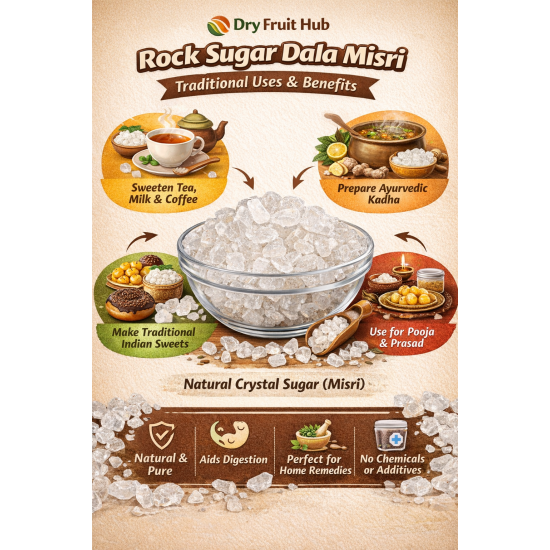
Perfect for: Sweetening Tea & Milk | Herbal Drinks & Kadha | Pooja & Prasad | Festive Sweets | Kesar Milk & Badam Milk | Ayurvedic Preparations | Mouth Freshener
How to Use Dala Misri — Best Practices
⚠️ Note: Misri dissolves more slowly than refined sugar — stir your drink for longer or let the crystal sit in the warm liquid for a minute before stirring for best results.
- In Tea or Milk: Add a crystal directly to your hot beverage and stir until dissolved, or place in a cup first before pouring the hot liquid over it.
- In Kadha or Herbal Drinks: Add after the drink is prepared and still warm for gentle sweetness without altering the herbal flavour.
- For Prasad: Use whole crystals as prasad or offering in pooja rituals in their natural form.
- Store Airtight: Seal the pack tightly after each use to prevent moisture absorption and clumping.
Easy Ways to Use Dala Misri
Idea 1: Fennel-Misri Mouth Freshener
Mix a small handful of misri crystals with roasted fennel seeds (saunf) for a classic traditional post-meal mouth freshener and digestive.
Idea 2: Saffron Kesar Milk
Add a small piece of misri to warm saffron milk for gentle sweetness that complements the delicate floral flavour of kesar without overpowering it.
Nutritional Information (Approx.)
| Nutrient | Per 100g | Per Serving (5g / 1 small crystal) |
|---|---|---|
| Energy | ~400 kcal | ~20 kcal |
| Total Carbohydrates | ~100g | ~5g |
| — of which Sugars | ~100g | ~5g |
| Protein | 0g | 0g |
| Fat | 0g | 0g |
*Rock sugar is essentially crystallized sucrose. Values are indicative. Not intended as medical or dietary advice.
⚠️ Usage Note
Dala Misri is essentially crystallized sugar — it contains the same calories and sugar content as refined sugar and should be consumed in moderation as part of a balanced diet. People with diabetes should not assume that misri is safer than regular sugar for blood glucose management and should consult their doctor regarding any sugar intake. While misri has a traditional association with Ayurvedic preparations, it is sold here as a culinary sweetener and is not a substitute for medical advice or treatment of any condition.
Explore more: Jaggery Powder (Gur) 500g | Pure Honey 1kg | Saunf (Fennel Seeds) 250g
❓ Frequently Asked Questions
Q1. What is Dala Misri (Rock Sugar)?
Dala Misri, also called Mishri or Crystal Sugar, is a naturally crystallised form of sugar known for its large transparent crystals, mild sweetness, and clean flavour. It's widely used in Indian households for tea, milk, prasad, and traditional recipes.
Q2. What is the difference between Dala Misri, refined sugar, and jaggery?
Dala Misri has a milder, cleaner sweetness than refined sugar and a neutral flavour unlike jaggery which has an earthy, molasses-like taste — see the comparison table above for details on which suits your recipe.
Q3. Is Dala Misri healthier than refined sugar?
Dala Misri is essentially crystallized sucrose and has the same calorie and sugar content as refined sugar. It is not a low-sugar or diabetic-safe alternative — the difference is primarily in flavour intensity and traditional use.
Q4. Can diabetics eat Dala Misri?
No — Dala Misri contains the same sugar content as refined sugar. People with diabetes should not assume it is safer and should consult their doctor regarding any sugar intake including misri.
Q5. Why is Dala Misri used in pooja and prasad?
Dala Misri has been used in Indian religious rituals for centuries for its natural form, clarity, and traditional association with purity — it's commonly offered as prasad and used in festive preparations.
Q6. Why does Dala Misri dissolve slowly in drinks?
Rock sugar crystals are large and dense, so they take longer to dissolve than fine granulated sugar. Stirring for longer or letting the crystal sit in warm liquid for a minute before stirring helps it dissolve evenly.
Q7. Can Dala Misri be used in kadha and herbal drinks?
Yes — misri is a traditional choice for sweetening kadha and herbal drinks because its mild flavour doesn't overpower the herbs and spices in the preparation.
Q8. How should Dala Misri be stored?
Store in an airtight container in a cool, dry place away from moisture. Seal the pack tightly after each use to prevent the crystals from absorbing moisture and clumping together.
Q9. What is the shelf life of Dala Misri?
When stored correctly in an airtight container away from moisture, rock sugar typically stays fresh and crystal-clear for 12-18 months or longer.
Q10. Can children eat Dala Misri?
Yes, in small, age-appropriate quantities as part of a balanced diet, though the large crystal size means small children should not be given whole crystals directly due to choking risk — dissolve in liquid first.
Q11. Is Dala Misri used as a mouth freshener?
Yes — misri mixed with roasted fennel seeds (saunf) is a classic traditional post-meal mouth freshener and digestive in Indian households.
Q12. What is Dala Misri called in Hindi, Telugu and Tamil?
Hindi: Dala Misri / Mishri (दाल मिश्री / मिश्री). Telugu: Panchadara Rayi / Mishri (పంచదార రాయి). Tamil: Kal Sarkarai (கல் சர்க்கரை).
Q13. Is Dala Misri suitable for kesar milk and badam milk?
Yes — misri is a popular choice for sweetening saffron and almond milk because its mild sweetness doesn't overpower the delicate flavours of kesar and cardamom.
Q14. Does Dala Misri contain artificial colour?
No — Dry Fruit Hub Dala Misri is free from artificial colouring. The natural transparency of the crystals is their natural colour.
Q15. Can Dala Misri be used in cooking and baking?
Yes — misri can be crushed and used as a natural sweetener in Indian sweets and desserts, though it's less practical for baking recipes that call for precise quantities of granulated sugar.
Q16. Is this product free from impurities?
Yes — Dry Fruit Hub Dala Misri is graded for crystal clarity and purity before packing, and each crystal is free from visible impurities or artificial colouring.
Q17. Is the 800g pack suitable for bulk household use?
Yes — the 800g pack is ideal for regular household, festive, and pooja use where a larger quantity is needed.
Q18. Is this product ISO and FSSAI certified?
Yes — Dry Fruit Hub operates from an ISO 22000:2018 and ISO 9001:2015 certified facility and is FSSAI licensed (License No. 10019047001430).
Q19. Do you offer free shipping on this product?
Yes — we offer free shipping on orders over Rs.599. Please check the checkout page for current shipping details to your location.
About Dry Fruit Hub: Headquartered in Begum Bazar, Hyderabad — one of India's oldest and most trusted dry fruit markets — Dry Fruit Hub has been sourcing and delivering premium quality dry fruits, nuts, seeds, and spices for over 20 years. ISO 22000:2018 & ISO 9001:2015 Certified. FSSAI Licensed. Trusted by households and businesses across India.