
Original Kashmiri Saffron (Kesar) 6g – 100% Pure Mongra Threads


From the same category


Original Kashmiri Saffron (Kesar) 6g – 100% Pure Mongra Threads
Original Kashmiri Saffron (Kesar) 6g | 100% Pure Mongra Saffron Threads
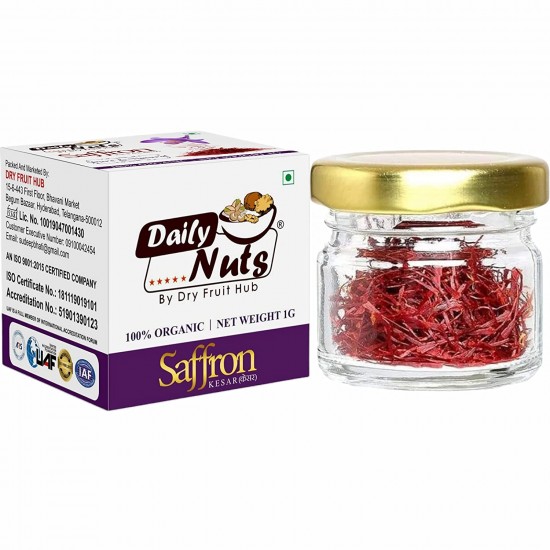
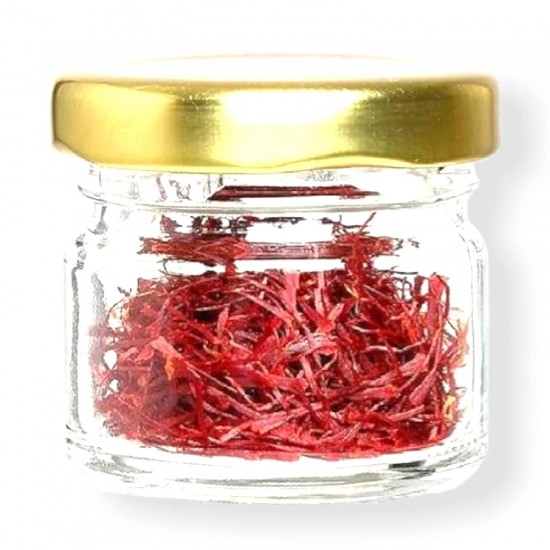
Saffron sold loose or in unmarked packets is among the most adulterated spices in the world — artificially dyed threads, maize silk, and counterfeit blends are common in the market. Dry Fruit Hub Original Kashmiri Saffron (Kesar) 6g is sourced directly from Kashmir and graded to Mongra standard — long, deep crimson threads with high crocin content, delivering an intense golden colour and characteristic honey-floral aroma when soaked. Known as the world's most valuable spice, just 5–7 strands are enough to transform kheer, biryani, and kesar milk — and this 6g pack gives you approximately 25–30 uses.
What Makes Dry Fruit Hub Kashmiri Saffron Different
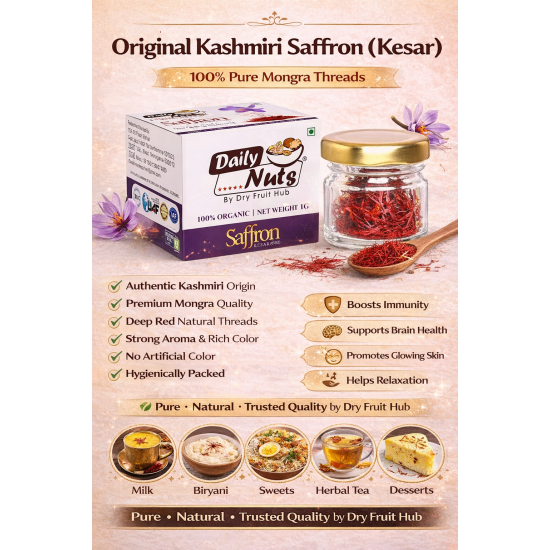
- ✅ 100% Pure Mongra Grade — deep crimson threads with no yellow style mixed in
- ✅ High Crocin Content — intense golden-yellow colour when soaked in warm liquid
- ✅ Strong Honey-Floral Aroma — characteristic of genuine Kashmiri saffron
- ✅ Sourced from Kashmir — handpicked from premium saffron flowers
- ✅ No Artificial Colour, Additives, or Preservatives
- ✅ Hygienically Packed in an ISO Certified Facility
How We Source & Grade Our Kashmiri Saffron
With over 20 years in the premium spice trade from Begum Bazar, Hyderabad, Dry Fruit Hub sources Kashmiri saffron directly and grades it to Mongra standard before packing. Mongra refers to the pure red stigma (thread) of the saffron flower with no yellow style attached — this gives it the deepest colour, strongest aroma, and highest crocin content. Batches with mixed style threads, faded colour, or weak aroma are rejected. What goes into your 6g pack is authenticated for colour-releasing strength and genuine floral fragrance.
How to Identify Real vs Fake Saffron
- ✅ Real saffron releases golden-yellow colour slowly when soaked in warm water — not instantly red
- ✅ Real saffron smells honey-floral with a slight metallic note — fake saffron smells sharp or chemical
- ✅ Real threads do not bleed colour immediately when rubbed between fingers
- ❌ Instant red water = dyed threads — a clear sign of adulteration
- ❌ Threads that dissolve completely = not real saffron
Kashmiri Mongra vs Iranian Saffron vs Adulterated Saffron
| Type | Thread | Colour Strength | Aroma |
|---|---|---|---|
| Kashmiri Mongra (this pack) | Pure red stigma only | Very high — rich golden | Strong honey-floral |
| Iranian Saffron (Negin/Sargol) | Red with some yellow style | High, slightly lighter | Floral, slightly different |
| Adulterated/Fake Saffron | Dyed silk or maize threads | Bleeds red instantly | Chemical or no aroma |
Saffron — Known By Different Names
| Hindi | केसर / जाफ़रान (Kesar / Zafran) |
| Telugu | కుంకుమ పువ్వు (Kunkuma Puvvu) |
| Tamil | குங்குமப்பூ (Kungumapoo) |
| English | Saffron / Kashmiri Saffron / Kesar |
Who Should Buy This Pack
- Home cooks wanting authentic Kashmiri saffron for kesar milk, kheer, and biryani
- Anyone who wants a verified, pure alternative to loose-market saffron
- Festival and gifting occasions where premium quality matters
- Small families or individuals who want a single use-size pack before committing to larger quantities
Perfect for: Kesar Milk & Badam Milk | Kheer & Rasmalai | Biryani & Pulao | Gulab Jamun & Indian Sweets | Herbal Tea & Kadha | Festive Gifting
How to Use Saffron — Best Practices
⚠️ Important: Always soak saffron before use in warm (not boiling) liquid. Never add dry threads directly to a dish — soaking releases colour and flavour evenly.
- Soak First: Take 5–7 strands and soak in 2 tablespoons of warm milk or water for 10–15 minutes.
- Add the Liquid: Add the saffron-infused liquid to your dish for even colour and flavour distribution.
- Use Sparingly: 5–7 strands per use is sufficient — more can make the dish taste medicinal.
- Store Airtight & Dark: Keep in the sealed container away from light, heat, and moisture.
Easy Ways to Use Kashmiri Saffron
Idea 1: Classic Kesar Milk
Soak 5-7 strands in warm milk for 10 minutes, then stir into a glass of hot sweetened milk with a pinch of cardamom for a warming evening drink.
Idea 2: Saffron Biryani Finish
Dissolve 7-8 strands in 3 tablespoons of warm milk and drizzle over the final rice layer of biryani before sealing for dum cooking.
⚠️ Dosage & Safety Note
Saffron is safe in normal culinary quantities of 5–7 strands per use. Do not consume large quantities — saffron in high doses (above 5g at one time) can be toxic and may cause dizziness, nausea, or other serious effects. Pregnant women should be especially careful — while small culinary amounts in warm milk are a traditional practice, high doses of saffron have been associated with stimulating uterine contractions and should be avoided without specific medical guidance. People on antidepressants or blood pressure medication should consult their doctor before regular high-quantity saffron consumption. This product is a culinary spice — not a substitute for medical or dietary advice.
Explore more: Kashmiri Saffron 4g – Antique Wooden Box | Kashmiri Saffron 6g | Saffron Kesar 2g Gift Box
❓ Frequently Asked Questions
Q1. What is Kashmiri Saffron (Kesar)?
Kashmiri Saffron is the pure dried stigma of the Crocus sativus flower, grown in the Kashmir valley. It's prized as the world's most valuable spice for its intense golden colour, honey-floral aroma, and distinct flavour.
Q2. What is Mongra grade saffron?
Mongra is the highest grade of Kashmiri saffron — it consists only of the pure red stigma with no yellow style attached, giving it the deepest colour, strongest aroma, and highest crocin content.
Q3. How can I identify real saffron vs fake?
Real saffron releases golden-yellow colour slowly when soaked in warm water (not instantly red), has a honey-floral aroma, and does not dissolve completely. Instant red colour means artificial dyeing — see the identification guide above.
Q4. How many saffron strands should I use per dish?
5–7 strands per use is the recommended culinary quantity. Using more strands can make dishes taste medicinal or bitter without adding proportionally more colour.
Q5. How long will a 1g saffron pack last?
At 5–7 strands per use, a 1g pack typically gives approximately 25–30 uses, making it very cost-effective for everyday cooking.
Q6. How should I use saffron in cooking?
Always soak 5–7 strands in 2 tablespoons of warm milk or water for 10–15 minutes first, then add the infused liquid to your recipe for even colour and flavour.
Q7. How should saffron be stored?
Keep in the sealed container in a cool, dark place away from direct sunlight, heat, and moisture. Avoid refrigeration unless in a perfectly sealed container as moisture damages the strands.
Q8. What is the shelf life of saffron?
When stored correctly in an airtight container away from light and heat, saffron retains its potency for 2–3 years from the date of packing.
Q9. Is it safe to use saffron daily?
Yes — 5–7 strands in warm milk or food daily is a traditional practice considered safe for most healthy adults in normal culinary quantities.
Q10. Can pregnant women consume saffron?
Pregnant women traditionally include a few strands of kesar in warm milk, but high doses should be strictly avoided as large amounts have been associated with stimulating uterine contractions. Always consult your doctor regarding quantity during pregnancy.
Q11. Is saffron dangerous in large quantities?
Yes — saffron in high doses (above 5g at one intake) can be toxic. Always use only the recommended culinary amount of 5–7 strands per use.
Q12. Does saffron interact with any medications?
People on antidepressants or blood pressure medication should consult their doctor before regular high-quantity saffron consumption as it may have interactions in larger amounts.
Q13. What is the difference between Kashmiri saffron and Iranian saffron?
Kashmiri Mongra saffron has deeper red threads with no yellow style, the highest crocin content, and a stronger honey-floral aroma. Iranian saffron (Negin/Sargol) is also high quality but has slightly different colour and aroma characteristics — see the comparison table above.
Q14. Why is Kashmiri saffron more expensive than other varieties?
Kashmiri saffron is among the finest in the world due to its high crocin content, the unique climate of the Kashmir valley, and the labour-intensive hand-harvesting process — each flower yields only 3 stigmas.
Q15. Can saffron be used in biryani?
Yes — saffron soaked in warm milk is drizzled over rice in the final layering stage of biryani to give it a golden hue and authentic aroma.
Q16. Can saffron be used in Indian sweets?
Yes — kesar is a classic ingredient in kheer, rasmalai, gulab jamun, kesar halwa, phirni, and many festive Indian desserts.
Q17. What is saffron called in Hindi, Telugu and Tamil?
Hindi: Kesar / Zafran (केसर / जाफ़रान). Telugu: Kunkuma Puvvu (కుంకుమ పువ్వు). Tamil: Kungumapoo (குங்குமப்பூ).
Q18. Why does real saffron release yellow colour and not red when soaked?
The colouring compound in saffron is crocin, which produces a golden-yellow colour in liquid. If saffron turns liquid red immediately, it has been artificially dyed — a common sign of adulteration.
Q19. Is saffron suitable for gifting?
Yes — saffron is a premium, universally valued spice that makes an excellent festive gift. For gifting, also see our Kashmiri Saffron 4g Antique Wooden Box and 2g Gift Box options.
Q20. Is this product free from artificial colour and additives?
Yes — Dry Fruit Hub Kashmiri Saffron is 100% pure and natural, free from artificial colour, additives, or preservatives.
Q21. Is this product ISO and FSSAI certified?
Yes — Dry Fruit Hub operates from an ISO 22000:2018 and ISO 9001:2015 certified facility and is FSSAI licensed (License No. 10019047001430).
Q22. Do you offer free shipping on this product?
Yes — we offer free shipping on orders over Rs.599. Please check the checkout page for current shipping details to your location.
About Dry Fruit Hub: Headquartered in Begum Bazar, Hyderabad — one of India's oldest and most trusted dry fruit markets — Dry Fruit Hub has been sourcing and delivering premium quality dry fruits, nuts, seeds, and spices for over 20 years. ISO 22000:2018 & ISO 9001:2015 Certified. FSSAI Licensed. Trusted by households and businesses across India.