
Basil Seeds (Sabja / Tukmariya) 800g – Premium Quality Seeds




From the same category


Basil Seeds (Sabja / Tukmariya) 800g – Premium Quality Seeds
Basil Seeds (Sabja / Tukmariya) 800g — Nature's Cooling Superfood
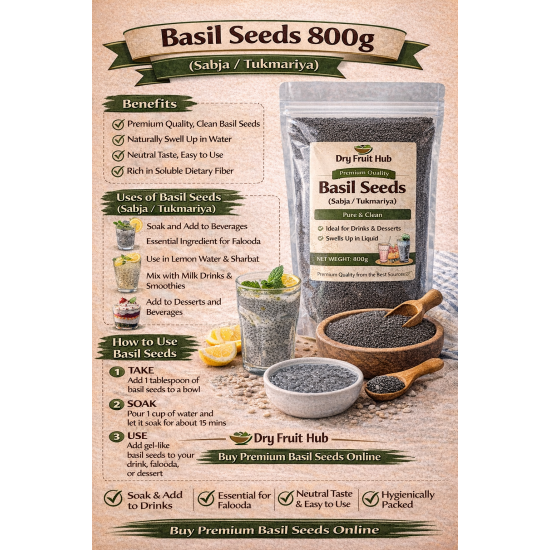
Our Basil Seeds, widely known as Sabja or Tukmariya seeds, are tiny black seeds derived from Sweet Basil (Ocimum basilicum) — a staple in Ayurvedic wellness for centuries. Naturally cooling and packed with fibre, our 400g pack is carefully sourced and hygienically packed, ready to transform your falooda, lemonade, and summer drinks with their signature gel-like texture.
Why Choose Dry Fruit Hub Basil Seeds?
| ✅ ISO 22000:2018 Certified | International Food Safety Management Standard — our cleaning and packing process is certified and regularly audited. |
| ✅ ISO 9001:2015 Certified | Quality Management System certification — consistent purity and quality across every batch. |
| ✅ 20+ Years of Trade Expertise | Based in Begum Bazar, Hyderabad — sourcing premium seeds and spices for decades. |
| ✅ Pure Sweet Basil Seeds | Sourced from Ocimum basilicum (Sweet Basil) — not to be confused with Tulsi (Holy Basil) seeds, which are a different variety. |
| ✅ No Additives, Naturally Cleaned | 100% pure basil seeds — nothing added, no artificial treatment. |
| ✅ Hygienically Packed — 800g | Packed in food-grade, moisture-proof packaging to preserve freshness and quality. |
Health Benefits of Sabja Seeds (Basil Seeds)
Sabja seeds have earned the nickname "miracle seeds" for good reason — they're nutrient-dense, low in calories, and offer benefits backed by both Ayurveda and modern nutrition science:
- Supports Weight Management: Rich in alpha-linolenic acid (ALA, an Omega-3 fat) and soluble fibre, sabja seeds swell up when soaked, creating a gel that keeps you feeling full for longer — helping curb cravings and reduce overeating.
- Natural Body Coolant: One of the most loved properties of sabja — it has a natural cooling effect on the body, making it a go-to ingredient in summer drinks across India.
- Supports Digestion: Acts as a natural stomach cleanser. The soluble fibre helps relieve bloating, supports smooth bowel movement, and may help reduce gut acidity.
- Rich in Antioxidants: Contains flavonoids and polyphenols that help neutralise free radicals, supporting healthy skin and hair.
- Mineral-Rich: A good source of calcium, magnesium, iron, potassium, and copper — important minerals for everyday bodily function.
- May Support Blood Sugar Management: The soluble fibre in sabja seeds may slow down carbohydrate absorption, which can help moderate post-meal blood sugar spikes as part of a balanced diet.
⚠️ Important Safety Notes — Please Read Before Use
Never eat sabja seeds dry/unsoaked — they are very hard in their raw form and pose a choking hazard, especially for children and elderly individuals. Always soak them in water first until they form their characteristic gel coating.
Stick to a recommended limit of 1-2 teaspoons (about 13-26g) per day. Overconsumption may cause bloating, gas, or digestive discomfort. If you're on diabetes medication or blood-thinning medication, please consult your doctor before regular use, as sabja seeds may interact with these treatments.
How to Use Sabja / Tukmariya Seeds
| Step | Instructions |
|---|---|
| 1 | Add 1-2 teaspoons of sabja seeds to a cup of warm or room-temperature water. |
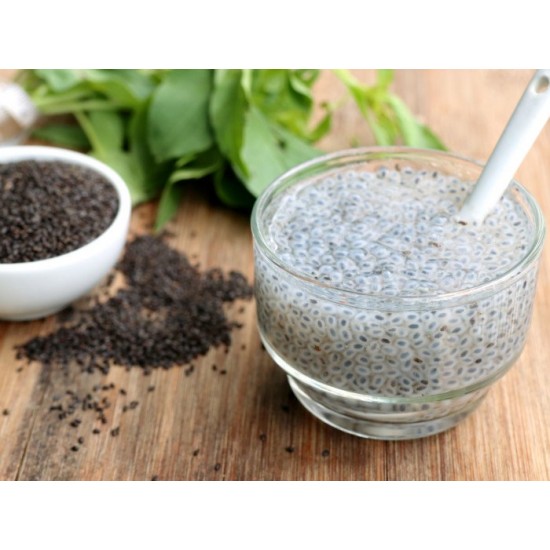
| 2 | Let them soak for 15-20 minutes until they swell and develop their signature translucent, gel-like coating. |
| 3 | Stir well and mix into lemonade, milkshakes, coconut water, lassi, falooda, or fresh fruit juice. |
| 4 | For weight management, drink soaked sabja water 15-20 minutes before a meal to help curb appetite. |
| 5 | Sprinkle over yoghurt, oatmeal, fruit salads, or puddings as a nutritious, textural garnish. |
| 6 | Drink plenty of water through the day when consuming sabja seeds regularly, since their fibre content draws in water. |
Nutritional Information (Approximate, per 100g)
| Nutrient | Per 100g |
|---|---|
| Energy | ~450-473 kcal |
| Carbohydrates | ~42 g |
| Protein | ~20 g |
| Total Fat (incl. Omega-3 ALA) | ~18-25 g |
| Dietary Fibre | ~40-42 g |
| Calcium | ~15% of Daily Value |
| Iron | ~2.3 mg |
| Magnesium | ~31.5 mg |
* Nutritional composition may vary slightly based on growing conditions and batch. Not intended as medical advice.
Product Details
| Product Name | Basil Seeds (Sabja / Tukmariya) |
| Net Weight | 800g |
| Brand | Dry Fruit Hub |
| Botanical Name | Ocimum basilicum (Sweet Basil) |
| Appearance | Small, black, oval seeds — gel-like coating when soaked |
| Primary Use | Drinks, falooda, desserts, smoothies |
| Shelf Life | 12 months from date of packing |
| Storage | Store in a cool, dry place in an airtight container, away from moisture and direct sunlight. |
| Certifications | ISO 22000:2018 | ISO 9001:2015 | FSSAI Licensed |
| Additives / Preservatives | None — 100% Natural |
Frequently Asked Questions (FAQs)
Q: How many sabja seeds should I eat per day?
The commonly recommended amount is 1-2 teaspoons (about 13-26g) per day, soaked in water. It's best to start with a smaller quantity and gradually increase, allowing your gut to adjust to the high fibre content and avoid digestive discomfort.
Q: Can I eat sabja seeds without soaking them?
No, this is not recommended. Sabja seeds are very hard in their raw, unsoaked form and can pose a choking hazard, particularly for children and elderly individuals. Always soak them in water for at least 15-20 minutes until they swell and form their characteristic gel-like coating before consuming.
Q: Do sabja seeds really help with weight loss?
Sabja seeds can support weight management as part of a balanced diet. Their high soluble fibre content swells in the stomach, promoting a feeling of fullness that helps reduce overeating and curb cravings. They are low in calories per serving, but they work best alongside an overall healthy diet and active lifestyle — not as a standalone weight loss solution.
Q: What is the difference between Sabja seeds and Sweet Basil leaves, or Tulsi seeds?
Sabja seeds come from Sweet Basil (Ocimum basilicum) — the same plant whose leaves are used in cooking (like pesto). They are different from Tulsi (Holy Basil, Ocimum tenuiflorum) seeds, which come from a different basil variety more associated with Ayurvedic immunity remedies in India. Both look similar when soaked but come from different plants with different traditional uses.
Q: Are there any side effects of eating too much sabja seeds?
Overconsumption may cause bloating, gas, abdominal cramps, or diarrhoea due to the high fibre content. Some individuals may also experience acid reflux, headache, or low blood sugar in rare cases. People allergic to basil or seeds should avoid sabja seeds. Always consume with adequate water and stick to recommended quantities (1-2 teaspoons per day).
Q: Can diabetics consume sabja seeds?
Sabja seeds may help moderate blood sugar levels due to their soluble fibre content, which slows carbohydrate absorption. However, if you are on diabetes medication, it's important to monitor your blood sugar closely and consult your doctor before adding sabja seeds regularly, as they may interact with blood-sugar-lowering medications.
Q: Are sabja seeds safe during pregnancy?
There isn't strong scientific consensus specific to pregnancy use, and individual responses can vary. We recommend that pregnant or breastfeeding women consult their doctor before adding sabja seeds to their regular diet.
Q: Why are sabja seeds popular in falooda and summer drinks?
Sabja seeds have natural cooling properties on the body, making them perfect for hot Indian summers. Their unique gel-like texture when soaked also adds a distinctive mouthfeel to drinks like falooda, lemonade, milkshakes, and lassi — which is why they've become a beloved ingredient across Indian households for generations.
Q: Do you offer bulk / wholesale orders for Basil Seeds?
Yes. With over 20 years of wholesale trade experience from Begum Bazar, Hyderabad, we supply Sabja/Tukmariya seeds in bulk to retailers, beverage businesses, and distributors across India. Please contact us through the Contact Us page for bulk pricing.
Q: What is the best way to store sabja seeds, and what is their shelf life?
Store unsoaked sabja seeds in a cool, dry place inside an airtight container, away from moisture and direct sunlight. When stored properly, they remain fresh and usable for up to 12 months from the packing date. Never store soaked/wet sabja seeds for more than a day — refrigerate leftover soaked seeds and use within 24 hours.
Q: Can sabja seeds be used in cooking, or only in drinks?
While most popular in drinks like falooda and lemonade, soaked sabja seeds can also be sprinkled over salads, soups, curries, and curd rice for added texture and nutrition. They have a mild, neutral taste, so they blend easily into both sweet and savoury dishes without overpowering other flavours.
Q: Can children eat sabja seeds?
Children can have small, well-soaked quantities of sabja seeds in drinks or desserts, but extra caution is needed — never give them unsoaked seeds, as this poses a choking risk. It's best to start with a very small quantity and supervise consumption, especially for younger children.
Q: How long does it take for sabja seeds to fully swell after soaking?
Sabja seeds typically take 15-20 minutes to fully swell and develop their gel-like coating in room-temperature or warm water. For a thicker, more set gel consistency (useful in desserts), you can soak them for 30 minutes or longer.
Q: Can sabja seeds be added directly to hot drinks like tea or coffee?
It's better to soak sabja seeds in room-temperature or lukewarm water first, then add them to your drink, rather than adding dry seeds directly into very hot liquids. Extremely hot temperatures aren't necessary for soaking and may affect the texture and some heat-sensitive nutrients.
Q: Do sabja seeds have any taste of their own?
Sabja seeds themselves are largely flavourless or have a very mild, slightly nutty taste once soaked. This neutral taste is exactly why they work so well in both sweet drinks (falooda, lemonade) and savoury dishes (salads, soups) without altering the original flavour much.
Q: Are sabja seeds good for skin and hair health?
Sabja seeds contain antioxidants like flavonoids and polyphenols, along with Omega-3 fatty acids, which may support skin hydration and healthy hair from within when consumed regularly as part of a balanced diet. However, they work best as a dietary addition rather than a direct topical treatment.
Q: Can I drink sabja seed water on an empty stomach every morning?
Many people do drink soaked sabja seed water on an empty stomach as part of a morning wellness routine, as it's believed to support digestion and hydration. If you're new to sabja seeds, start with a smaller quantity to see how your stomach responds before making it a daily empty-stomach habit.
Q: What is sabja/basil seeds called in different Indian languages?
These seeds are commonly called Sabja or Tukmariya/Takmaria in Hindi and across most of India, Sabja Ginjalu in Telugu, and Kamakasturi Vithai in Tamil. They're also known internationally as falooda seeds, due to their popularity in the dessert drink of the same name.
Q: Why do some sabja seeds float while others sink when soaked?
This is a completely normal, natural variation and not a quality issue. Slight differences in seed density, age, or moisture content can cause some seeds to float while others sink during soaking — all of them will still swell and develop the gel-like coating, and remain equally safe and nutritious to consume.
Dry Fruit Hub — Trusted Since 20+ Years
ISO 22000:2018 & ISO 9001:2015 Certified | Begum Bazar, Hyderabad | 100% Natural Products | FSSAI Licensed