
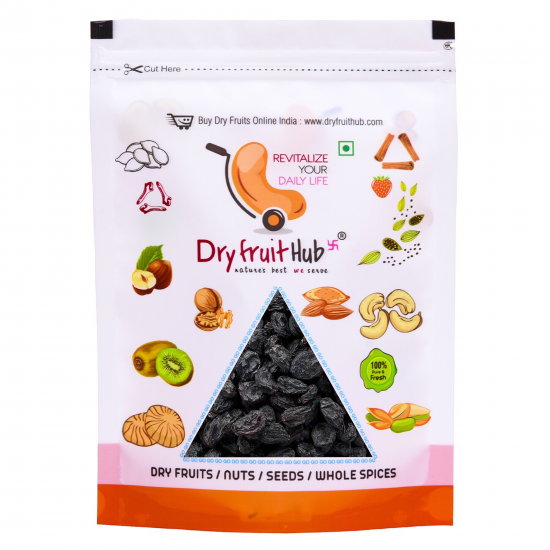
Black Kismis Seedless 250g | Premium Black Raisins (Kali Kishmish) | 100% Natural & Sun-Dried


From the same category


Black Kismis Seedless 250g | Premium Black Raisins (Kali Kishmish) | 100% Natural & Sun-Dried
Black Kismis Seedless 250g | Buy Premium Black Raisins (Kali Kishmish) Online
Most raisins on the market are dried fast and cheap, leaving them hard, overly sweet, or stuck with stems and bits of seed. Dry Fruit Hub Black Kismis Seedless 250g is graded and hand-sorted differently — plump, soft black raisins that are 100% seedless, naturally sun-dried, and packed with no added sugar, no preservatives, and no artificial colour. Sold under the name Kali Kishmish across most Indian kitchens, this 250g pack is built for people who want a clean, iron-rich snack they can soak, cook with, or eat straight from the pouch — without compromising on quality.
What Makes Dry Fruit Hub Black Kismis Different
- ✅ 100% Natural & Sun-Dried — no mechanical heat-drying shortcuts
- ✅ Truly Seedless — hand-sorted, no seeds or stems to pick through
- ✅ No Added Sugar, Ever — sweetness comes purely from the grape
- ✅ Rich in Iron, Calcium, Potassium & Antioxidants
- ✅ Soft, Plump Texture — moisture retained, never dry or leathery
- ✅ Resealable, Moisture-Resistant Pack for Lasting Freshness
- ✅ 100% Natural & Sun-Dried — no mechanical heat-drying shortcuts
- ✅ Truly Seedless — hand-sorted, no seeds or stems to pick through
- ✅ No Added Sugar, Ever — sweetness comes purely from the grape
- ✅ Rich in Iron, Calcium, Potassium & Antioxidants
- ✅ Soft, Plump Texture — moisture retained, never dry or leathery
- ✅ Resealable, Moisture-Resistant Pack for Lasting Freshness
How We Source & Grade Our Black Kismis
With over 20 years in the dry fruits trade out of Begum Bazar, Hyderabad, Dry Fruit Hub grades black raisins on three things: colour uniformity, moisture content, and seed-free consistency. Batches that are unevenly dried, too dark from over-processing, or inconsistently sized are rejected before packing. What reaches your 250g pack has already passed this internal grading — which is also why our black kismis hold their texture well past the first few weeks of opening, instead of hardening quickly like loose-market raisins often do.
With over 20 years in the dry fruits trade out of Begum Bazar, Hyderabad, Dry Fruit Hub grades black raisins on three things: colour uniformity, moisture content, and seed-free consistency. Batches that are unevenly dried, too dark from over-processing, or inconsistently sized are rejected before packing. What reaches your 250g pack has already passed this internal grading — which is also why our black kismis hold their texture well past the first few weeks of opening, instead of hardening quickly like loose-market raisins often do.
Black Kismis vs Munakka vs Green Raisins — Which One Do You Need?
| Type | Seeds | Taste | Best For |
|---|---|---|---|
| Black Kismis Seedless | None | Deep, naturally sweet | Daily eating, soaking, kheer, baking |
| Munakka | Has seeds, larger size | Very sweet, syrupy | Ayurvedic/traditional remedies |
| Green Raisins (Golden Kishmish) | None | Light, slightly tangy | Pulao, biryani, lighter desserts |
Black Kismis — Known By Different Names
Hindi काली किशमिश (Kaali Kishmish) Telugu బ్లాక్ కిస్మిస్ / ఎండు ద్రాక్ష (Black Kismis / Endu Draksha) Tamil கருப்பு திராட்சை (Karuppu Thiratchai) English Black Raisins / Dried Black Grapes
| Hindi | काली किशमिश (Kaali Kishmish) |
| Telugu | బ్లాక్ కిస్మిస్ / ఎండు ద్రాక్ష (Black Kismis / Endu Draksha) |
| Tamil | கருப்பு திராட்சை (Karuppu Thiratchai) |
| English | Black Raisins / Dried Black Grapes |
Who Should Buy This Pack
- Anyone looking for a natural, no-added-sugar snack to manage daily iron intake
- Home cooks who soak raisins overnight as part of a morning wellness routine
- Bakers and dessert-makers who need a consistent, seedless raisin for kheer, halwa, and cakes
- Parents wanting a clean-label, chemical-free snack option for children above 1 year
- Gym-goers and athletes who use natural raisins for a quick pre-workout energy source
- Anyone looking for a natural, no-added-sugar snack to manage daily iron intake
- Home cooks who soak raisins overnight as part of a morning wellness routine
- Bakers and dessert-makers who need a consistent, seedless raisin for kheer, halwa, and cakes
- Parents wanting a clean-label, chemical-free snack option for children above 1 year
- Gym-goers and athletes who use natural raisins for a quick pre-workout energy source
Perfect for: Direct Snacking | Soaked Breakfast Bowls | Kheer & Halwa | Trail Mixes | Cakes & Baking | Festive Sweets | Smoothies | Gifting
How to Eat Black Kismis — Best Ways to Consume
⚠️ Note: Black raisins are naturally high in sugar even without any added sugar — enjoy in moderate daily portions.
- Soak Overnight: Place 8–10 black kismis in a small bowl of clean water and leave covered overnight at room temperature.
- Drain & Eat: The next morning, drain the water and eat the soaked raisins on an empty stomach for easier digestion and better nutrient absorption.
- Direct Snacking: Eat a small handful straight from the pack as a quick, natural energy snack between meals.
- Add to Recipes: Mix into kheer, halwa, cake batter, or trail mixes at any stage of cooking — they soften beautifully when heated.
⚠️ Note: Black raisins are naturally high in sugar even without any added sugar — enjoy in moderate daily portions.
Easy Ways to Use Black Kismis
Idea 1: Soaked Kismis Energy Bowl
Soak a handful of black kismis overnight with a few almonds and walnuts. Drain in the morning and eat together as a quick iron-rich breakfast boost.
Idea 2: Classic Kheer Garnish
Add a tablespoon of black kismis to simmering milk along with rice or vermicelli. They plump up beautifully and add natural sweetness without extra sugar.
Nutritional Information (Approx.)
| Nutrient | Per 100g | Per Serving (20g) |
|---|---|---|
| Energy | 299 kcal | 60 kcal |
| Total Carbohydrates | 79g | 16g |
| — of which Sugars | 59g | 12g |
| Dietary Fibre | 3.7g | 0.7g |
| Protein | 3.1g | 0.6g |
| Iron | 1.9mg | 0.4mg |
| Potassium | 749mg | 150mg |
*Values are indicative averages and may vary slightly by batch. Not intended as medical or dietary advice.
⚠️ Health & Safety Note
Black raisins are naturally high in sugar despite having no added sugar. People with diabetes should consume in limited quantity and monitor blood sugar levels. People prone to kidney stones (oxalate-sensitive) should consult their doctor before regular consumption. This product is not a substitute for medical treatment of anemia or any diagnosed condition — please consult a physician or dietitian for personalised advice.
Black raisins are naturally high in sugar despite having no added sugar. People with diabetes should consume in limited quantity and monitor blood sugar levels. People prone to kidney stones (oxalate-sensitive) should consult their doctor before regular consumption. This product is not a substitute for medical treatment of anemia or any diagnosed condition — please consult a physician or dietitian for personalised advice.
Explore more: Black Kismis Seedless 400g | Black Raisins with Seed (Munakka) | Green Raisins 250g
❓ Frequently Asked Questions
Q1. What is Black Kismis Seedless?
Black kismis seedless are dried black grapes without seeds — naturally sweet, soft, and rich in iron, fibre, and antioxidants. Commonly known as black raisins or kali kishmish.
Q2. What is the difference between black raisins and green raisins?
Black raisins come from black grapes and have a deeper flavour with slightly higher iron content. Green raisins (golden kishmish) come from green grapes and taste lighter and tangier.
Q3. What is the difference between black kismis and munakka?
Munakka refers to large, seeded raisins, while black kismis seedless are smaller and completely seed-free. Both are dried grapes but differ in size, seed content, and traditional use — see the comparison table above.
Q4. How many black raisins should I eat per day?
A common recommendation is 8–10 raisins (about 20g) per day for a healthy adult. This can vary by individual needs — consult a dietitian for a personalised quantity.
Q5. How should I eat black kismis for best benefits?
Soak them overnight in water and eat in the morning on an empty stomach. This may help improve iron absorption and ease digestion.
Q6. Can black raisins help with anemia or low hemoglobin?
Black raisins are naturally rich in iron and traditionally used to support hemoglobin levels. They should complement, not replace, medical treatment for diagnosed anemia.
Q7. Are black raisins good for weight gain or weight loss?
They are calorie-dense due to natural sugars, so small portions can support healthy weight gain, while larger quantities may not suit a weight-loss plan. Portion control matters.
Q8. Can diabetics eat black raisins?
Only in small, controlled quantities, with regular blood sugar monitoring. Please consult your doctor before adding them to a diabetic diet.
Q9. Are black kismis safe for people with kidney stones?
People prone to oxalate-related kidney stones should consult their doctor, as dried fruits including raisins contain oxalates that may affect some individuals.
Q10. Can pregnant women eat black raisins?
Generally considered safe in moderation due to their iron and fibre content, but pregnant women should consult their doctor before making dietary changes.
Q11. Can children eat black kismis? At what age?
Generally suitable for children above 1 year in small, supervised portions — a natural way to add iron and energy to their diet.
Q12. Are these black kismis free from added sugar and chemicals?
Yes — Dry Fruit Hub black kismis are 100% natural, sun-dried, and free from added sugar, preservatives, artificial colours, or chemicals.
Q13. How is quality checked before packing?
Each batch is graded for colour uniformity, moisture content, and seed-free consistency before it's approved for packing — see "How We Source & Grade" above.
Q14. What is the shelf life of black kismis?
When stored correctly in an airtight container in a cool, dry place, black kismis typically stay fresh for 9–12 months from the date of packing.
Q15. How should black kismis be stored?
Store in an airtight container in a cool, dry place away from direct sunlight. Refrigeration can help extend freshness in warm or humid climates.
Q16. Can I use black kismis in kheer, halwa, and baking?
Yes — they're widely used in kheer, halwa, cakes, cookies, and trail mixes, adding natural sweetness and a soft, chewy texture.
Q17. What is the calorie count of black raisins per 100g?
Approximately 299 kcal per 100g, primarily from natural sugars and carbohydrates.
Q18. Do black raisins help with digestion?
The dietary fibre in black raisins may help support regular digestion when consumed with adequate water intake.
Q19. What is black kismis called in Hindi, Telugu and Tamil?
Hindi: Kaali Kishmish (काली किशमिश). Telugu: Endu Draksha (ఎండు ద్రాక్ష). Tamil: Karuppu Thiratchai (கருப்பு திராட்சை).
Q20. Can black kismis be eaten directly without soaking?
Yes — they can be eaten directly as a snack. Soaking is optional and mainly recommended to ease digestion and improve nutrient absorption.
Q21. Are black raisins suitable for gym-goers and athletes?
Yes — they're a popular natural energy source due to their quick-release natural sugars and iron content, often eaten in small portions pre or post-workout.
Q22. Is this product ISO and FSSAI certified?
Yes — Dry Fruit Hub operates from an ISO 22000:2018 and ISO 9001:2015 certified facility and is FSSAI licensed (License No. 10019047001430).
About Dry Fruit Hub: Headquartered in Begum Bazar, Hyderabad — one of India's oldest and most trusted dry fruit markets — Dry Fruit Hub has been sourcing and delivering premium quality dry fruits, nuts, seeds, and spices for over 20 years. ISO 22000:2018 & ISO 9001:2015 Certified. FSSAI Licensed. Trusted by households and businesses across India.