
Dried Apricot 200g Seedless – Premium Turkish Apricot



From the same category


Dried Apricot 200g Seedless – Premium Turkish Apricot
Dried Apricot 200g Seedless — known in India as Khumani, Khubani, or Khurmani — is a premium selection of plump, soft, naturally sun-dried apricots sourced directly from the fertile orchards of Turkey, the world's largest producer of the finest quality dried apricots. With their characteristic vibrant golden-orange colour, delicate floral sweetness, and tender chewy bite, Turkish dried apricots are widely regarded as the gold standard of dried apricots worldwide.
At Dry Fruit Hub, our Dried Apricot 200g Seedless pack is carefully sourced from premium-grade Turkish apricots, sorted for consistent size and colour, and hygienically packed — with no sulphites, no added sugar, no artificial colour, and no preservatives. Most commercially sold dried apricots are treated with sulphur dioxide (SO2) to maintain their bright orange colour and extend shelf life — our apricots are free from sulphite treatment, making them the cleaner, healthier, and more natural choice for your family.
Whether you are eating them as a wholesome daily snack, soaking them overnight for digestive benefits, adding them to oatmeal, baking, curries, or Hyderabadi Khubani Ka Meetha — Dry Fruit Hub Turkish Khumani delivers unmatched taste, nutrition, and purity in every piece. Backed by ISO 22000:2018 certification and FSSAI approval, every pack is a promise of quality you can trust for your entire family.
Key Features & Product Highlights
- ✅ Premium Turkish Origin — Sourced from Turkey's famous Malatya region, world capital of dried apricot production, known for unmatched quality and sweetness
- ✅ No Sulphites (SO2-Free) — Free from sulphur dioxide treatment — the chemical preservative used by most commercial brands. Our natural apricots are darker in colour which is a sign of authenticity and purity
- ✅ No Added Sugar — 100% natural sweetness from the fruit itself — no refined sugar, no glucose syrup, no artificial sweeteners
- ✅ No Artificial Colour — The golden-amber colour is completely natural. Brightly orange apricots are sulphited; our deeper natural colour = cleaner product
- ✅ No Preservatives — Clean label; pure dried apricot with nothing added beyond the fruit itself
- ✅ Seedless Variety — Pitted for convenience; ready to eat, cook, or bake with instantly
- ✅ Soft & Chewy Texture — Tender, moist, pliable texture — not hard or over-dried
- ✅ Rich in Vitamin A, Iron & Potassium — One of the most nutrient-dense dried fruits available
- ✅ 200g Value Pack — Large family-size pack for daily snacking, cooking, baking & gifting
- ✅ ISO 22000:2018 & ISO 9001:2015 Certified — Food safety and quality management certified at every stage
- ✅ FSSAI Licensed — Safe, approved, and fully compliant for food use in India (License No. 10019047001430)
Turkish Dried Apricot vs California Dried Apricot – What's the Difference?
| Feature | Turkish Apricot (Ours) | California Apricot |
|---|---|---|
| Flavour | Sweet, floral, complex | Tart, tangy, more acidic |
| Texture | Soft, plump, chewy | Firmer, drier |
| Size | Medium to large, whole | Smaller, flatter halves |
| Sulphites (SO2) | ✅ Sulphite-Free (Ours) | ⚠️ Usually Sulphited |
| Colour | Natural amber-brown | Bright orange (SO2) |
| Iron Content | Higher (2.7mg/100g) | Moderate |
| Best For | Snacking, Indian sweets, cooking | Baking, granola bars |
| Price | More affordable | Premium priced |
Perfect for These Uses & Recipes
- ???? Ready-to-eat healthy snack — sweet, satisfying, no mess
- ???? Oatmeal, muesli & breakfast porridge topping
- ???? Hyderabadi Khubani Ka Meetha — the iconic traditional dessert
- ???? Cakes, muffins, cookies & fruit cake baking
- ???? Salads — pairs beautifully with rocket, goat cheese & walnuts
- ???? Moroccan tagines, Persian rice & savoury lamb dishes
- ???? Smoothies, lassi & energy shakes
- ???? Pulao, biryani garnish & rice pilaf
- ???? Children's tiffin snack — natural sweet alternative to candy
- ???? Dry fruit gift hampers — festive & wedding gifting
- ???? Pregnancy nutrition — iron & folate source
- ???? Pre/post-workout natural energy snack
How to Use Dried Apricots — Tips & Best Practices
- As a Daily Snack: Eat 5–8 pieces (approximately 40g) of seedless dried apricots as a mid-morning or evening snack. Their natural sweetness satisfies sweet cravings while providing fibre, Vitamin A, and iron. No preparation needed — seedless, ready to eat straight from the pack.
- Overnight Soaking (Best for Digestion): Soak 8–10 dried apricots in a glass of water overnight. In the morning, eat the softened apricots and drink the soaking water. The soaking water is rich in natural soluble fibre and potassium — a gentle morning digestive tonic that helps relieve constipation and boosts energy.
- For Khubani Ka Meetha (Hyderabadi Classic): Soak 250g dried apricots in water overnight until plump. Blend half, keep half whole. Cook with sugar, saffron, and cardamom to desired consistency. Serve warm or chilled with malai or ice cream. Our seedless Turkish apricots are the perfect variety for this iconic Hyderabadi dessert.
- In Cooking (Tagines & Curries): Rinse and add whole dried apricots directly to slow-cooked lamb, chicken, or vegetable tagines and gravies. They soften completely during cooking and release a gentle fruity sweetness that beautifully balances savoury and spiced dishes.
- In Baking: Chop into small pieces and fold into cake batter, cookie dough, muffin mix, or fruit cake. No need to pre-soak for baking — the moisture in the batter rehydrates the apricot pieces during baking. For finely chopped pieces, chill the apricots for 15 minutes first — cold apricots chop more cleanly.
- Storage After Opening: Transfer to an airtight container. Refrigerate for up to 6 months after opening. At room temperature, consume within 4–6 weeks after opening. If apricots become too hard over time, place in a sealed container with a slice of fresh apple or orange peel overnight — they will rehydrate naturally.
Easy Recipes Using Dried Apricot 200g
Recipe 1: Hyderabadi Khubani Ka Meetha (Classic Apricot Dessert)
Ingredients: 250g Seedless Dried Apricot, 3 cups water, 4 tbsp sugar (adjust to taste), ¼ tsp cardamom powder, a few saffron strands, 1 cup fresh cream or malai for serving.
Method: Soak apricots in water overnight until plump and tender. Drain, reserve soaking water. Blend half the apricots with ½ cup soaking water into a smooth puree. In a pan, combine the whole soaked apricots, puree, remaining soaking water, sugar, saffron, and cardamom. Simmer on medium heat for 10–12 minutes, stirring, until mixture thickens to a compote consistency. Cool, refrigerate. Serve chilled with a generous dollop of malai or cream. A timeless Hyderabadi classic — naturally sweet, deeply flavoured, and irresistible.
Recipe 2: Apricot Almond Overnight Oats (High-Protein Breakfast)
Ingredients: ½ cup rolled oats, 1 cup milk or almond milk, 1 tbsp chia seeds, 1 tbsp honey or dates syrup, ¼ tsp cinnamon, 6–8 dried apricots (roughly chopped), 1 tbsp almond flakes.
Method: Mix oats, milk, chia seeds, sweetener, and cinnamon in a jar. Fold in chopped dried apricots. Cover and refrigerate overnight. In the morning, top with almond flakes and a few whole dried apricots. A complete breakfast ready in 5 minutes — rich in fibre, Vitamin A, iron, and slow-release carbohydrates for sustained morning energy.
Recipe 3: Turkish Apricot & Walnut Energy Balls (No-Bake)
Ingredients: 1 cup Seedless Dried Apricots, ½ cup walnuts, 2 tbsp desiccated coconut, 1 tbsp honey, ¼ tsp cardamom powder, pinch of salt.
Method: Blend dried apricots in a food processor until they form a sticky paste. Add walnuts and pulse until coarsely combined. Add coconut, honey, cardamom, and salt — mix well. Roll into small balls (approximately 15–18 pieces). Roll in extra desiccated coconut or crushed pistachios. Refrigerate for 1 hour. Store refrigerated for up to 2 weeks. A completely natural, no-sugar-added energy snack — perfect for school tiffin, travel, and healthy gifting.
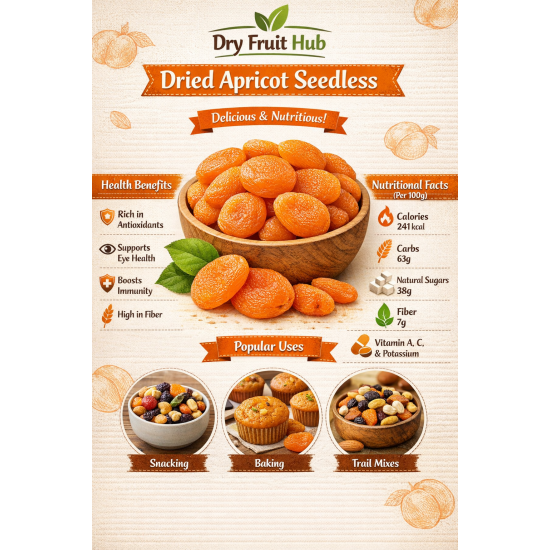
Nutritional Information (Approx. per 100g)
| Nutrient | Per 100g | Per Serving (40g / 5–8 pieces) |
|---|---|---|
| Energy | 241 kcal | 96 kcal |
| Total Carbohydrates | 63 g | 25.2 g |
| — of which Natural Sugars | 53 g | 21.2 g |
| — of which Dietary Fibre | 7 g | 2.8 g |
| Protein | 3.4 g | 1.4 g |
| Total Fat | 0.5 g | 0.2 g |
| Vitamin A (Beta-Carotene) | 180 µg RAE | 72 µg RAE |
| Potassium | 1162 mg | 465 mg |
| Iron | 2.7 mg | 1.1 mg |
| Calcium | 55 mg | 22 mg |
| Magnesium | 32 mg | 12.8 mg |
| Phosphorus | 71 mg | 28.4 mg |
| Vitamin C | 1 mg | 0.4 mg |
| Sodium | 10 mg | 4 mg |
Nutritional values are approximate and may vary slightly by batch, harvest season, and growing region. Not intended as medical or dietary advice.
Storage Instructions
- ???? Store in a cool, dry place away from direct sunlight and heat
- ???? Keep sealed — dried apricots absorb moisture from the air and can become sticky or develop mould if exposed to humidity
- ???? Always transfer to an airtight container after opening the pack
- ❄️ Refrigerate after opening for longer freshness — up to 6 months refrigerated
- ???? For long-term storage, freeze in a sealed zip-lock bag for up to 18 months with no quality loss
- ???? If apricots harden over time: place in a sealed container with a slice of fresh apple overnight — they will naturally rehydrate to soft, chewy texture
- ???? Best consumed within 9–12 months of manufacture (sealed) or 3–4 months after opening at room temperature
Frequently Asked Questions (FAQs) — Dried Apricot 200g Seedless (Turkish Khumani)
Q1. What is the difference between sulphited and sulphite-free dried apricots?
This is the most important question to ask when buying dried apricots. Sulphited apricots are treated with sulphur dioxide (SO2/E220) — a chemical preservative that maintains the bright orange colour and extends shelf life. While approved for use in food, sulphites can trigger asthma attacks, allergic reactions, headaches, and digestive issues in sensitive individuals. Sulphite-free apricots (like ours) are naturally dried without any chemical treatment. They appear darker amber-brown in colour because natural oxidation occurs during drying. This darker colour is a sign of a cleaner, additive-free product — not spoilage or poor quality. If you see brightly orange dried apricots, they are almost certainly sulphited.
Q2. Why are Dry Fruit Hub Dried Apricots darker in colour? Are they spoiled?
No — the darker amber-brown to golden-brown colour of our dried apricots is completely natural and expected. The vibrant bright orange colour seen in many commercially sold apricots is caused by sulphur dioxide (SO2) treatment, which we do not use. Our apricots naturally oxidise and darken during the drying process — the same way a cut apple turns brown when exposed to air. This is a sign of natural processing. If the apricots smell good (sweet, fruity, floral), have a soft chewy texture, and taste sweet — they are perfectly fresh and of premium quality.
Q3. What is "Khumani" — is it the same as dried apricot?
Yes. Khumani (also spelled Khubani, Khurmani, or Khubani) is the Hindi/Urdu term for apricot. In Indian cuisine, particularly in Hyderabadi cooking, Khumani refers specifically to dried apricots. The famous Hyderabadi dessert "Khubani Ka Meetha" (also called Qubani Ka Meetha) is made entirely from soaked and cooked dried apricots with sugar, cardamom, and cream or malai. It is served at nearly every traditional Hyderabadi wedding feast. Dry Fruit Hub Khumani 1kg is the perfect variety for this iconic dessert.
Q4. Are dried apricots good for iron deficiency and anaemia?
Dried apricots are one of the best plant-based sources of non-haem iron — providing 2.7mg iron per 100g. A 40g serving delivers approximately 1.1mg iron — about 6% of the daily recommended intake for adult women. For maximum iron absorption from plant sources, consume dried apricots with a Vitamin C-rich food or drink (lemon juice, amla, orange juice) which significantly enhances non-haem iron absorption. While dried apricots are an excellent dietary iron source, they should not replace medical treatment for clinical iron deficiency anaemia — always consult your doctor.
Q5. Are dried apricots rich in Vitamin A? What are the benefits?
Yes — dried apricots are one of the richest fruit sources of Vitamin A (beta-carotene), providing 180 µg RAE per 100g. Vitamin A is essential for: eye health and night vision, skin health and radiance, immune system function, and healthy cell growth. Beta-carotene is the plant-based precursor to Vitamin A and is also a powerful antioxidant that protects cells from oxidative stress. Consuming 5–8 dried apricots daily provides a meaningful dose of beta-carotene as part of a balanced diet.
Q6. How many dried apricots should I eat per day?
The recommended daily serving for dried apricots is 5–8 pieces (approximately 40g), providing around 96 kcal, 2.8g fibre, 465mg potassium, 1.1mg iron, and 72µg Vitamin A. This is a nutritious and reasonable daily amount. Eating more than 10–15 pieces daily may cause excess sugar intake and loose stools due to the high sorbitol and fibre content. People with kidney disease should be mindful of the high potassium content (1162mg/100g) — consult your doctor if you have kidney issues.
Q7. Are dried apricots good for constipation and digestion?
Yes. Dried apricots are excellent for digestive health. They contain 7g of dietary fibre per 100g (both soluble and insoluble) along with natural sorbitol — a sugar alcohol with a mild laxative effect. Soaking 6–8 dried apricots overnight and eating them with the soaking water on an empty stomach in the morning is a traditional natural remedy for constipation. The soluble fibre also acts as a prebiotic — feeding beneficial gut bacteria and supporting a healthy gut microbiome. However, excessive consumption can cause loose stools — moderation is key.
Q8. Can diabetics eat dried apricots?
Dried apricots have a low Glycaemic Index (GI of approximately 30–35), making them one of the better dried fruit choices for diabetics compared to raisins (GI 66) or dates (GI 42–55). The high fibre content slows glucose absorption significantly. In small portions (3–5 pieces, approximately 20g), dried apricots can be incorporated into a diabetic diet. However, they are high in natural sugars (53g/100g) so portion control is essential. Always consult your doctor or diabetic care team before making dietary changes.
Q9. Are dried apricots good for skin health?
Yes — dried apricots are often called a "superfood for skin" due to their exceptional beta-carotene (Vitamin A) and antioxidant content. Beta-carotene is essential for skin cell renewal and repair, and protects against UV-induced skin damage and premature ageing. The potassium in apricots supports skin hydration and healthy cell function. Regular moderate consumption of dried apricots as part of a balanced diet, combined with good hydration, is associated with improved skin texture, radiance, and reduced signs of premature ageing.
Q10. Can dried apricots be eaten during pregnancy?
Dried apricots are a nutritious addition to a pregnancy diet in moderation. They provide: iron for prevention of pregnancy anaemia, folate for neural tube development, Vitamin A for foetal cell development, potassium for blood pressure management, and fibre to combat common pregnancy constipation. The recommended serving during pregnancy is 3–5 pieces daily. Since they are high in natural sugars, women with gestational diabetes should consume in strict moderation. As with any dietary change during pregnancy, consult your gynaecologist or dietitian first.
Q11. Can children eat dried apricots?
Yes — dried apricots are an excellent healthy snack for children aged 3 and above. They provide Vitamin A for eye health and immunity, iron for growth and cognitive development, natural energy from fruit sugars, and fibre for healthy digestion. They are a much healthier alternative to candy, biscuits, and processed snacks. Always give seedless apricots to children (our product is seedless) and chop into smaller pieces for children under 5 to prevent choking. For toddlers under 2, soak and blend apricots for safe incorporation into purees and porridge.
Q12. How is Khubani Ka Meetha made with dried apricots?
Khubani Ka Meetha is a traditional Hyderabadi dessert made by soaking seedless dried apricots overnight until plump, then cooking with sugar, saffron, and cardamom to a rich compote. Half the apricots are blended smooth, half kept whole for texture. It is served chilled with malai (clotted cream), whipped cream, or vanilla ice cream. Our Turkish seedless dried apricots are the ideal variety — their natural sweetness and soft texture create an authentic, flavour-rich Khubani Ka Meetha without needing excessive added sugar. A full recipe is provided in the recipes section above.
Q13. What is the difference between dried apricot and apricot jam?
Dried apricot is a whole, minimally processed fruit — just the apricot with its moisture removed. It retains fibre, iron, potassium, Vitamin A, and natural fruit compounds. Apricot jam is cooked with large amounts of added sugar, pectin, and often preservatives — it loses most nutritional value during cooking and is primarily a high-sugar spread. For health benefits, dried apricots are vastly superior. For spreading on toast, jam is more convenient. There is no comparison nutritionally — dried apricot is a whole food; jam is a condiment.
Q14. What is the shelf life of Dried Apricot 200g and how should I store them?
Sealed pack remains fresh for 9–12 months from the date of manufacture. After opening, store in an airtight container: at room temperature for 4–6 weeks; in the refrigerator for up to 6 months; in the freezer for up to 18 months. Signs of spoilage: mould (white or green spots), fermented or off smell, or unusually wet/slimy texture — discard immediately if any of these appear. Normal slight surface bloom (white powdery coating) on some pieces is crystallised natural sugar — not mould — and is completely safe to eat.
Q15. Does Dry Fruit Hub Dried Apricot have food safety certifications?
Yes. Dry Fruit Hub is ISO 22000:2018 (Food Safety Management System) and ISO 9001:2015 (Quality Management System) certified. We hold a valid FSSAI License No. 10019047001430. Our dried apricots are sourced, quality-checked, and hygienically packed under strict food safety protocols at our certified facility in Begum Bazar, Hyderabad — India's most trusted dry fruit sourcing hub for over a century.
About Dry Fruit Hub
Headquartered in Begum Bazar, Hyderabad — one of India's oldest and most trusted dry fruit markets — Dry Fruit Hub has been sourcing and delivering premium quality dry fruits, nuts, and food ingredients for over 20 years. ISO 22000:2018 & ISO 9001:2015 Certified. FSSAI Licensed. Trusted by home cooks, professional chefs, sweet shops, bakers, and food businesses across India.
Order Dried Apricot 1kg Seedless (Turkish Khumani) from Dry Fruit Hub today and enjoy premium sulphite-free Turkish apricots, no added sugar, hygienic packaging, ISO-certified quality, and fast delivery across India. ????